

Travelling for competitions, training camps and international events is part of life for many athletes. While these opportunities can be exciting, crossing multiple time zones can leave you feeling tired, unfocused and out of sync with your surroundings.
Many athletes expect to feel fatigued after a long journey. However, jet lag can affect much more than sleep. It can influence concentration, reaction time, recovery, mood, appetite and sporting performance (Janse van Rensburg et al., 2020; Botonis et al., 2025).
The good news is that jet lag is temporary (Spitzer et al., 1999; Janse van Rensburg et al., 2020). Understanding the signs and symptoms, knowing why it occurs and having a plan to manage it can help you adapt more quickly and minimise its impact on training and competition.

What Is Jet Lag?
Jet lag is a temporary disruption to your body’s internal clock following rapid travel across multiple time zones (Spitzer et al., 1999; Janse van Rensburg et al., 2020). Your body operates according to a twenty four hour cycle known as your circadian rhythm. This internal clock regulates important functions such as:
- Sleep and wake patterns
- Alertness
- Hormone production
- Body temperature
- Appetite
- Physical and cognitive performance
When you travel across several time zones, your body remains aligned with the time at your departure location while the local time at your destination changes (Botonis et al., 2025). This creates a mismatch between your internal clock and the external environment, resulting in jet lag (Spitzer et al., 1999). Jet lag is most commonly experienced when crossing three or more time zones and symptoms often develop within the first day after arrival (Janse van Rensburg et al., 2020).
Jet Lag VS Travel Fatigue
Many athletes assume every travel related symptom is caused by jet lag. In reality, travel fatigue and jet lag are separate but related issues.
Travel Fatigue
Travel fatigue refers to the physical and mental tiredness that develops as a result of travelling itself (Samuels, 2012; Janse van Rensburg et al., 2020). Therefor travel faigue can occur when travelling in the same time zone. Contributors to travel fatigue may include:
- Early departures
- Airport delays
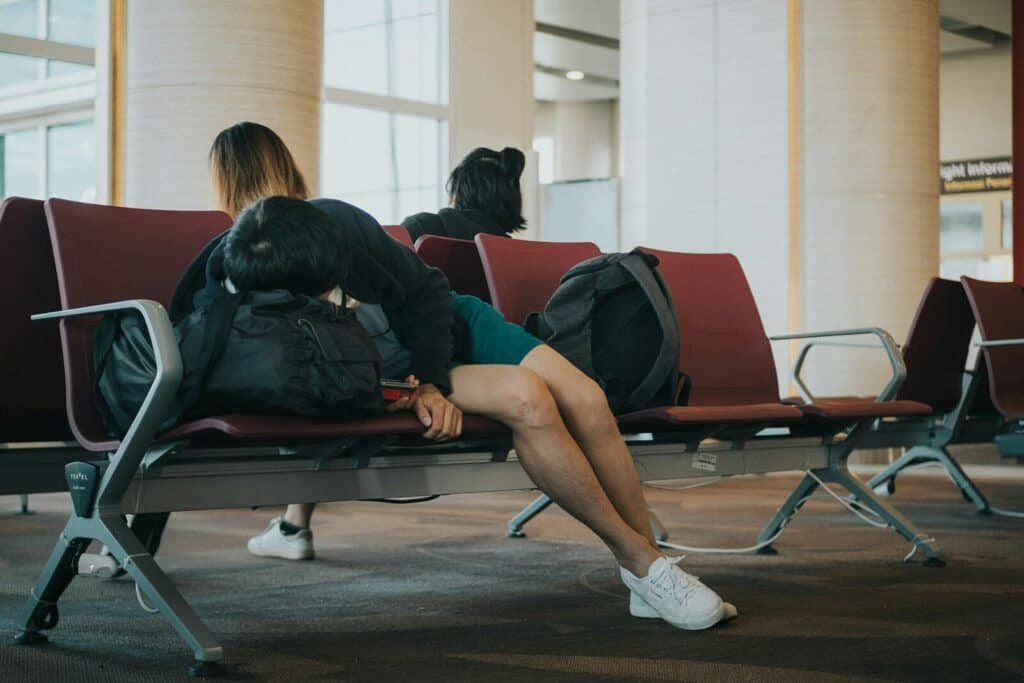
- Long periods of sitting
- Dehydration
- Poor sleep during travel
- Carrying equipment and luggage
- Competition related stress
Jet Lag
Jet lag occurs specifically when crossing multiple time zones and disrupting your circadian rhythm (Botonis et al., 2025; Janse van Rensburg et al., 2020; Spitzer et al., 1999). Unlike travel fatigue, symptoms are linked to your body clock being out of sync with local time and will persist until your circadian rhythm adjusts. Many athletes experience both Jet lag and travel fatigue simultaneously.
For a deeper explanation, read Jet Lag vs Travel Fatigue in Athletes: What’s the Difference?
Why Does Jet Lag Happen?
Although you can adjust your watch as soon as you land, your body cannot change time zones instantly. Your circadian rhythm relies on cues from the environment, including:
- Light exposure
- Sleep timing
- Meal timing
- Physical activity
- Social routines
When these cues suddenly change, your body requires time to adapt to the new schedule.
The more time zones crossed, the greater the potential disruption. Research has consistently shown that symptoms tend to increase as travel distance and time zone changes increase (Spitzer et al., 1999).
Factors That Influence Jet Lag
Not all athletes experience jet lag in the same way. Several factors can affect how severe symptoms become and how quickly you recover.
Direction of Travel
Travelling east is generally more difficult than travelling west (Fowler et al., 2017). Research in elite sport has demonstrated that eastward travel may negatively affect performance outcomes when recovery time is limited (Leota et al., 2022).
This is because eastward travel requires your body clock to move earlier, something most people find harder than delaying sleep and wake times.
Number of Time Zones Crossed
Crossing one or two time zones may have a small impact. But crossing six, eight or more time zones often results in greater circadian disruption and more noticeable symptoms (Spitzer et al., 1999; Janse van Rensburg et al., 2020).
Sleep Before Travel
Athletes who begin their journey sleep deprived may experience more severe symptoms and slower recovery.
Previous Travel Experience
Some athletes adapt more quickly due to previous exposure to international travel and competition.
Individual Differences
Factors such as age, chronotype, lifestyle and general wellbeing can influence how athletes respond to travel (Waterhouse et al., 2002).
How Can Jet Lag Affect Sports Performance?
Jet lag does not simply make athletes feel tired. It can affect several aspects of performance that are important in both training and competition (Janse van Rensburg et al., 2020; Botonis et al., 2025)
Physical Performance
Athletes may experience reduced endurance, reduced repeat sprint ability, increased feelings of effort, reduced coordination and lower training quality.
(Fowler et al., 2017; Botonis et al., 2025)
Cognitive Performance
Jet lag may affect concentration, attention, reaction time, tactical decision making, learning and memory.
(Spitzer et al., 1999; Botonis et al., 2025)
Recovery
Jet lag can also influence sleep quality, recovery between sessions, motivation, mood and overall wellbeing.
(Janse van Rensburg et al., 2020; Waterhouse et al., 2002)
What Are The Symptoms of Jet Lag in Athletes?
Symptoms vary between individuals, but several are consistently reported by athletes (Spitzer et al., 1999; Waterhouse et al., 2002),
Sleep Related Symptoms
Many athletes have difficulty falling asleep, reporting that they feel wide awake when trying to sleep according to local time.
Sleep may become fragmented, with multiple awakenings.
Athletes will often wake several hours before their intended time because their body is still on their original time zone.
Even after a full nights sleep, many athletes may not feel refreshed due to the poor sleep quality.
Physical Symptoms
As mentioned above, fatigue is one of the most common symptoms experienced alongside jet lag and often presents as a persistent feeling of tiredness that does not fully resolve after a night’s sleep.
Many athletes describe feeling flat, sluggish or lacking their normal energy levels. Training sessions may feel more demanding than usual, even when workloads remain unchanged, and simple daily tasks can require more effort than expected.
Headaches may also occur during the adjustment period, particularly if athletes were already fatigued, dehydrated or experiencing disrupted sleep before travelling. While usually temporary, headaches can contribute to feelings of discomfort and reduced wellbeing during the first few days after arrival.
Experiencing gastrointestinal disturbances following long haul travel and circadian disruption is also common. Symptoms may include reduced appetite, bloating, constipation, indigestion or general digestive discomfort. Changes to meal timings, food choices, hydration status and the body’s internal clock can all contribute to these symptoms (Spitzer et al., 1999; Samuels, 2012).
Cognitive Symptoms
Jet lag can affect more than just physical wellbeing. Many athletes report cognitive symptoms that can influence both training and competition performance.
One of the most commonly reported symptoms is reduced concentration. Athletes may find it more difficult to maintain focus during training sessions, team meetings, tactical discussions or competition. Tasks that would normally feel routine can require greater mental effort and attention.
Slower reaction times are also frequently reported. Responding to rapidly changing situations, making quick decisions or reacting to opponents may feel slightly slower than normal, which can be particularly important in sports that require speed, precision or tactical awareness.
Some athletes experience temporary memory difficulties, such as forgetfulness or finding it harder to retain information. This may be noticeable when learning new tactics, remembering instructions or processing feedback from coaches.
Mental fatigue is another common symptom. Athletes often describe feeling mentally drained, foggy or less alert than usual. Activities that would normally feel straightforward may require significantly more effort, leaving athletes feeling exhausted despite not necessarily completing more work than usual (Spitzer et al., 1999; Janse van Rensburg et al., 2020).
These cognitive symptoms are often overlooked because athletes tend to focus on physical fatigue. However, in many sports, impaired concentration, decision making and reaction time may have just as much influence on performance as physical tiredness.
Emotional Symptoms
Jet lag does not only affect physical and cognitive performance. Many athletes also notice changes in mood and emotional wellbeing during the adjustment period.
Irritability is a common symptom, with small frustrations often feeling more difficult to manage than usual. Athletes may find themselves becoming impatient with teammates, coaches, travel delays or situations that would not normally bother them.
Reduced motivation is also frequently reported. Training sessions, recovery activities and competition preparation can feel harder to engage with, particularly when fatigue and disrupted sleep are present. Athletes may notice a temporary reduction in enthusiasm, focus or drive despite being excited about the event or competition.
Some athletes describe feeling emotionally flat, less positive or generally not quite themselves. While these mood changes are usually short lived, they can influence confidence, enjoyment and overall wellbeing during the first few days after arrival.
It is important to remember that these emotional responses are a normal part of adapting to travel and circadian disruption. In most cases, they improve as sleep patterns stabilise and the body gradually adjusts to the new time zone (Spitzer et al., 1999; Janse van Rensburg et al., 2020).
Many of the physical, cognitive and emotional symptoms described above form the basis of validated jet lag assessment tools used by sports practitioners and researchers to monitor athlete wellbeing and recovery following travel.
If you are interested in how practitioners assess and monitor jet lag, read How Do You Identify Jet Lag in Athletes? A Guide to the Columbia, Liverpool and Charité Jet Lag Scales.
How Long Does Jet Lag Last?

Recovery varies considerably between individuals. As a general guide:
- Westward travel often requires around half a day per time zone crossed.
- Eastward travel often requires around one day per time zone crossed.
However, this is only a rough estimate and does vary from person to person (and even differences between sexs). Some athletes feel significantly better after a few days, while others may continue to experience symptoms for a week or longer. Factors such as sleep quality, travel schedules and the number of time zones crossed all influence recovery (Botonis et al., 2025).
What Can Athletes Do To Reduce The Impact of Jet Lag?
Although jet lag cannot always be prevented, there are steps athletes can take to reduce its impact.
1.) Prioritise Sleep
Aim to arrive as well rested as possible and create opportunities for quality sleep after arrival. Research also suggests athletes should take a nap prior to travel (for time shifts of approx 5 hours).
2.) Use Natural Daylight
Exposure to daylight is one of the most important signals helping your body adjust to a new time zone. So whip back those curtains.


3.) Stay Hydrated
Long haul travel can contribute to dehydration, which may worsen feelings of fatigue.
4.) Maintain Consistent Meal Patterns
Eating at local meal times may help reinforce adaptation to the new time zone.
5.) Be Patient With Performance
Avoid judging your fitness or performance too quickly following arrival. Your body is adapting to a significant physiological challenge.
6.) Communicate With Your Support Team
If symptoms are affecting training or competition, speak with your coach or support staff.
When Should Athletes Seek Additional Support?
Most jet lag symptoms improve naturally as your body adjusts. However, you should consider seeking support if:
- Symptoms persist longer than expected
- Sleep remains severely disrupted
- Symptoms are affecting training or competition
- You travel internationally on a regular basis
Support may be available from your support team:
- Sports scientists
- Strength and conditioning coaches
- Sports nutritionists
- Sports psychologists
- Sports coaches
I would also recommend discussing with your general practitioner (GP) or team doctor if your symptoms worsen or you struggle with Jet Lag frequently when you are travelling.
Frequently Asked Questions
What are the first signs of jet lag in athletes?
Fatigue, disrupted sleep, reduced concentration and lower energy levels are often among the earliest symptoms athletes notice.
Is jet lag worse when travelling east?
For most people, yes. Eastward travel typically requires the body clock to advance, which is generally more difficult than delaying it.
Can jet lag affect sports performance?
Yes. Jet lag may influence physical performance, reaction time, decision making, concentration, mood and recovery.
How many time zones cause jet lag?
Symptoms can occur after crossing as few as two or three time zones, although they become more noticeable as the number of time zones increases.
Can athletes completely prevent jet lag?
No. However, planning ahead, managing sleep, staying hydrated and using evidence based travel strategies may help reduce symptom severity.
Summary
Jet lag is a common challenge for athletes travelling across multiple time zones. While symptoms such as fatigue, poor sleep, reduced concentration and low energy can be frustrating, they are a normal response to circadian disruption and usually improve as your body adjusts.
Understanding the signs and symptoms of jet lag can help athletes recognise when performance, recovery and wellbeing may be affected. By prioritising sleep, managing travel effectively and seeking support when needed, athletes can reduce the impact of jet lag and return to performing at their best more quickly.
For athletes who regularly travel internationally, developing a travel strategy alongside qualified practitioners can make a significant difference to both performance and recovery.